
Logistics is undergoing a revolution. With the rise of online commerce, the need to reduce delivery times and the pursuit of greater efficiency have completely changed the role of warehouses. Today, they are no longer simple storage spaces: they are smart centers where every square meter counts. In this article by SimonRack we are going to analyze the trends in warehouse design, which range from strategies such as cross-docking even solutions of micro-fulfillment, all of them aimed at improving the agility and competitiveness of companies.
The new role of warehouses in the supply chain
Previously, warehouses were simply transit points where products were stored until the market needed them. But with the pressure of e-commerce and 24-hour delivery, the concept has changed. Now, warehouses must enable real-time inventory management, facilitate rapid order fulfillment, and optimize last-mile delivery.
This change has led to innovations both in the physical design of warehouses and in the way workflows are organized.
Cross-docking: less stock, more agility
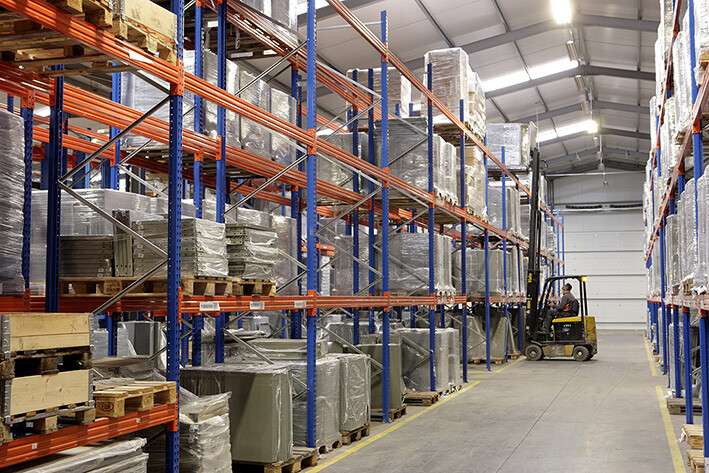
He cross-docking This is an increasingly common technique where products spend almost no time in storage. Merchandise arrives at the logistics center, is sorted, and quickly shipped to its final destination. This model reduces the need for large warehouses and minimizes inventory-related costs. However, it requires precise coordination between suppliers, carriers, and warehouse staff. For it to function effectively, the facility must be designed with highly efficient loading and unloading areas and specialized shelving to facilitate rapid merchandise movement.
Micro-fulfillment: the answer to urban e-commerce
The growth of e-commerce has brought another of the trends in warehouse design most used: the centers of micro-fulfillment. These are smaller spaces, strategically located near large cities, whose objective is to bring the stock closer to the end customer.
These micro-warehouses allow orders to be prepared in just a few hours and facilitate services such as same-day or even two-hour delivery. In terms of design, they feature high-density storage, use compact shelving, and, in many cases, integrate automated systems that optimize picking.

Automation and digitization
Beyond the management model, new trends favor automation. Mobile robots, intelligent conveyor belts, and warehouse management software (WMS) are essential to this shift. Thanks to digitalization, inventory can be monitored in real time, errors reduced, and supply needs anticipated. Furthermore, automation streamlines repetitive processes such as moving goods or packaging, freeing up staff for more complex tasks.
Flexibility in the spaces
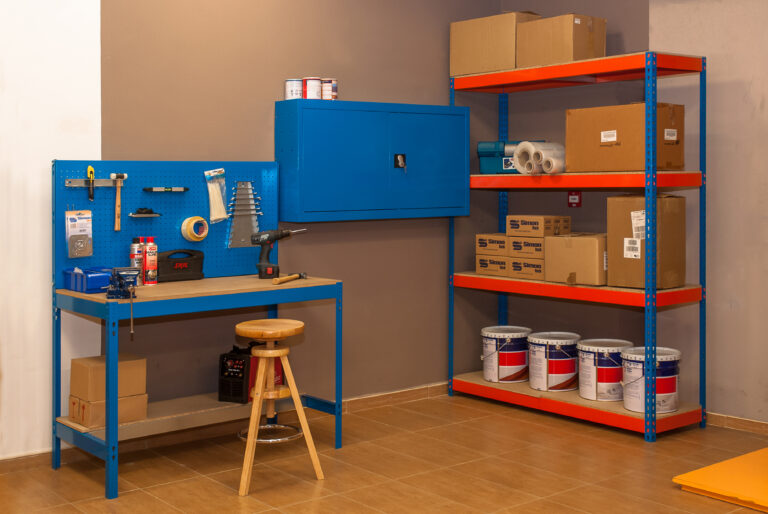
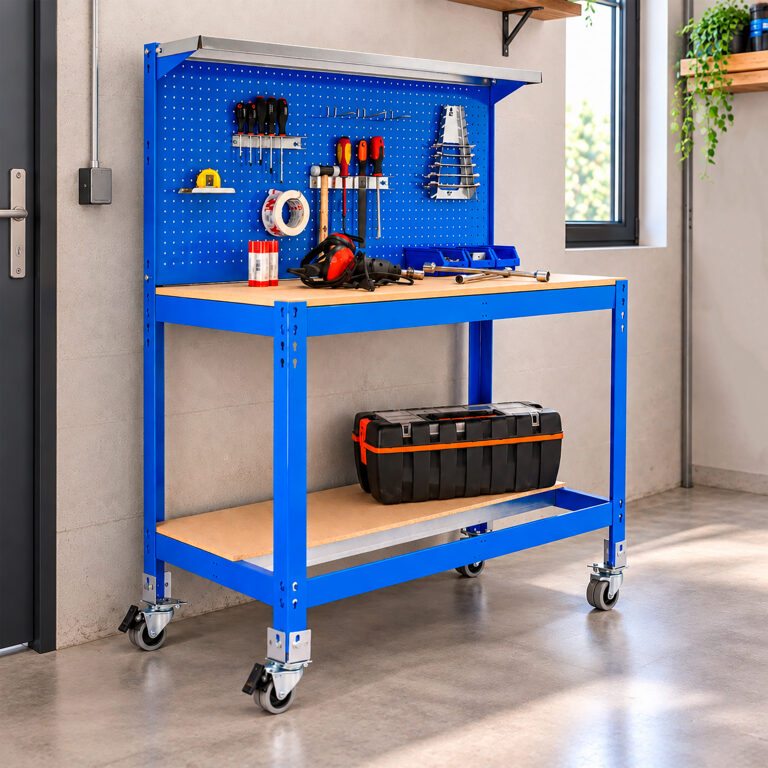
Another common feature in the new warehouses is the flexibility. Businesses need facilities that can adapt to peak demand, changes in the product catalog, or new distribution methods. This requires adjustable shelving., workbenches Mobile or scalable storage systems that can be expanded without major construction work. The ability to reorganize a warehouse in a matter of days has become a decisive competitive advantage.
Sustainability in warehouse design
And of course, you can't talk about trends without considering sustainability. More and more companies want to reduce the environmental impact of their operations. This translates into warehouses that optimize energy use, incorporate LED lighting, solar panels, and efficient climate control systems. Furthermore, the designs of industrial furniture itself are evolving; they are now more durable, recyclable, and have a smaller carbon footprint. In our case, we offer robust and adaptable shelving that guarantees a long lifespan and takes into account current environmental requirements.
Safety and ergonomics
Warehouse redesign isn't just about increased efficiency; it also aims to improve worker safety and well-being. Spaces with better lighting, wider walkways, and improved storage systems are all factors that minimize the risk of accidents.
Likewise, great attention is paid to ergonomics: adjustable workbenches, tools that reduce physical effort, and designs that facilitate safe handling of merchandise.
The future of logistics is defined by innovation and adaptability. From the cross-docking, which reduces time and costs, up to micro-fulfillment, which brings the product closer to the customer, all trends point to the same goal: to create more efficient, flexible and sustainable warehouses.
In this process, having durable and versatile storage solutions is essential. Do you want to transform your warehouse with shelving, workbenches, and modular systems? ¡Visit our website and check out our catalog!





 Español
  Deutsch
  Français
  Italiano
  English (UK)