

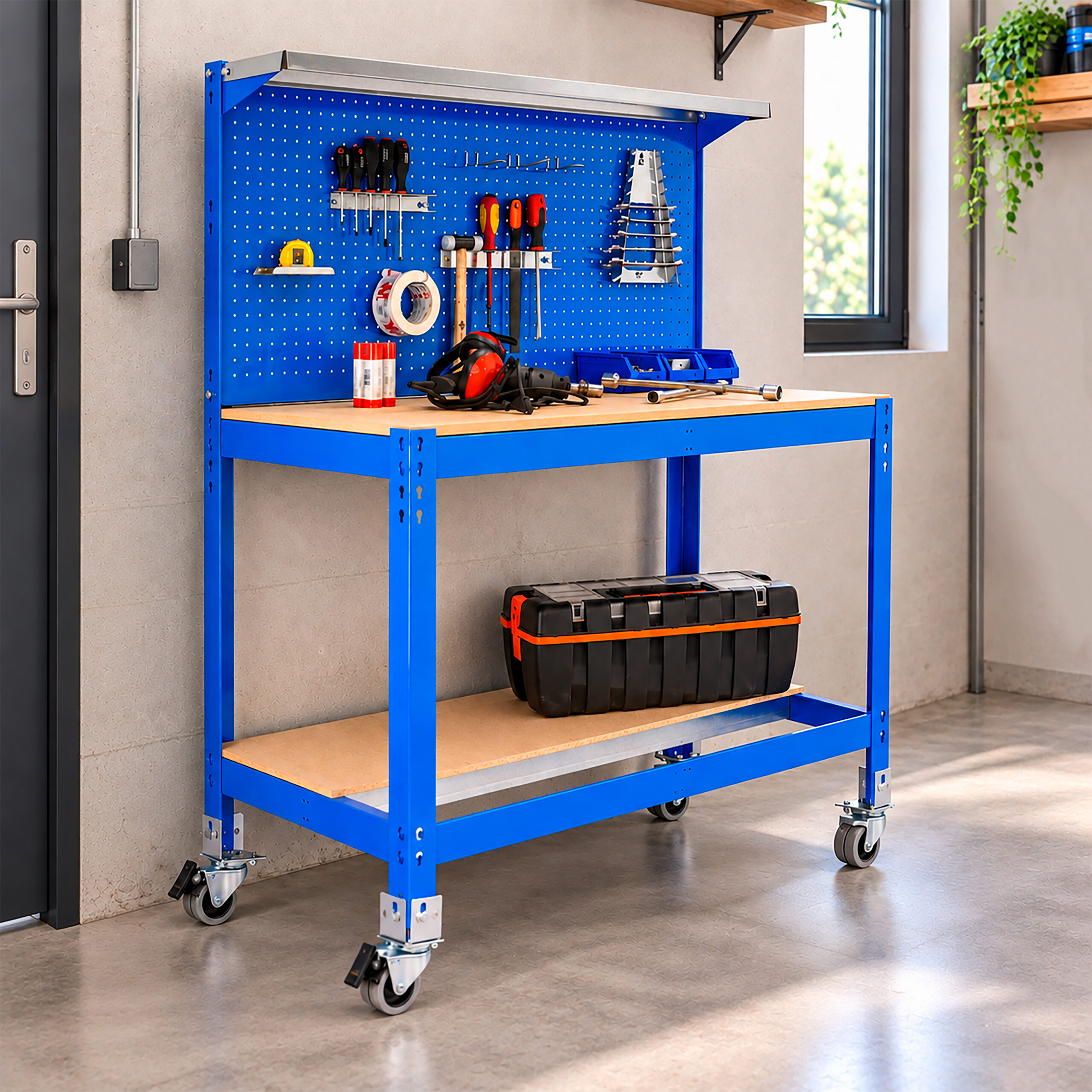
When space is limited, every decision about workshop equipment matters. Choosing a workbench with wheels It might seem like the most practical option at first glance, especially if you need to move materials, reorganize your work area, or gain versatility. However, it's not always the best alternative. In many cases, a fixed workbench offers the stability, strength, and safety that certain jobs require.
The key is not to think about which option is "better" in absolute terms, but to understand what your workshop really needs. A professional who does light assembly, DIY projects, or occasional adjustments does not work the same way as someone who uses heavy tools, makes continuous cuts, or needs a completely stable base for precision tasks.
In this guide you will see when it is advisable to invest in a workbench with wheels, When is a fixed-line system more advisable, and what factors should you consider before making a decision?.
When does it make sense to choose a workbench with wheels?
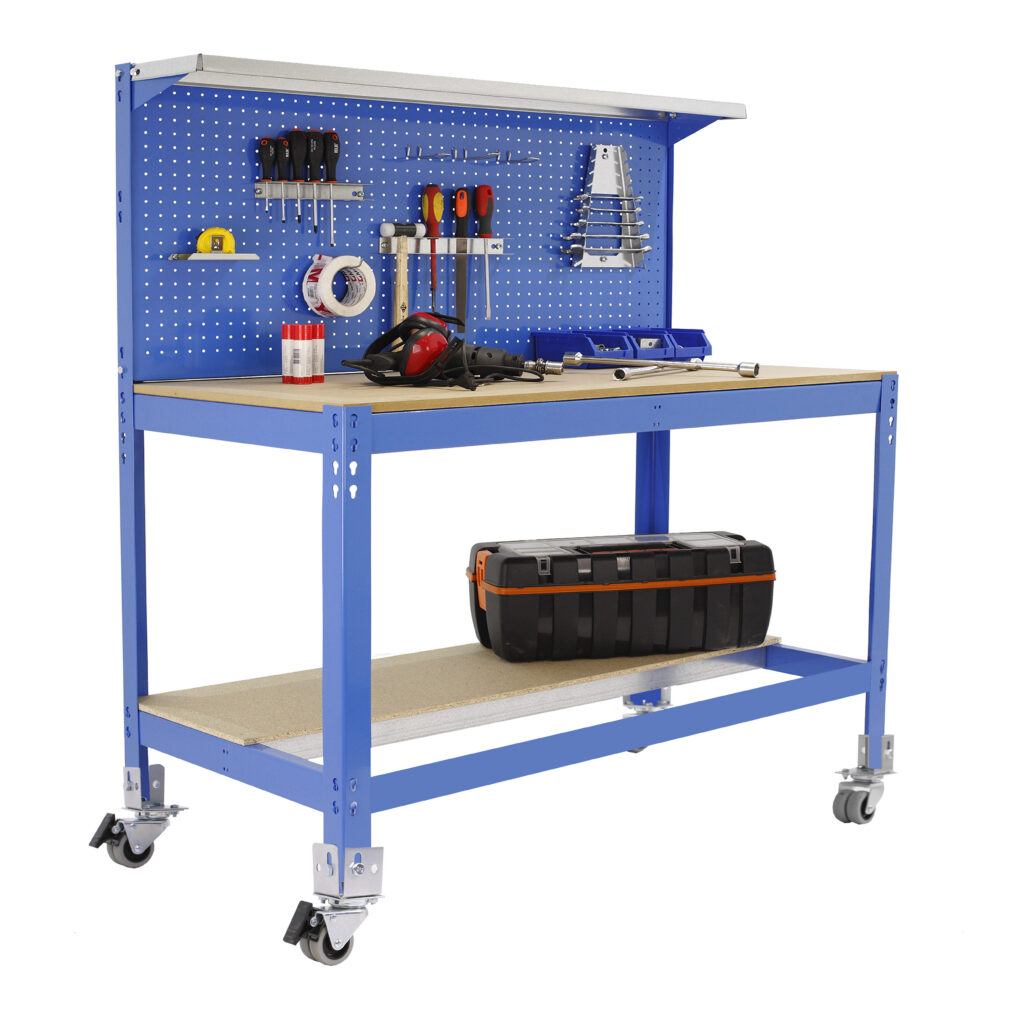
A workbench with wheels It stands out above all for its ability to adapt to dynamic spaces. In a small workshop, where every square meter is often at a premium, being able to move the workbench can make a significant difference.
1. When you need to reorganize the space frequently
If your workshop serves multiple functions or you share the work area with storage, tools, packaging or assembly, mobility gives you room to reorganize the environment according to the task at hand.
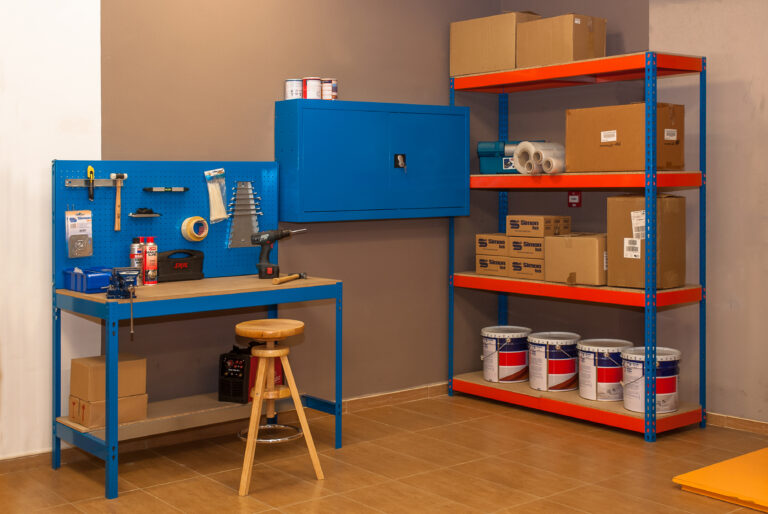
For example, you can bring the bank closer to the metal shelving When you need to prepare materials, move them to create more space, or put them away when you're not using them. In a small space, this flexibility can greatly improve daily operations.
2. When you perform light work or assembly
Workbenches with wheels are often a good solution for tasks that don't cause significant damage to the work surface: assembly, inspections, handling small parts, DIY projects, or auxiliary work. In these cases, the value of mobility outweighs the need for a completely stationary structure.
3. When you're looking for a more versatile workshop
Some workshops don't have a single work routine. One day is dedicated to assembly, another to order preparation, and another to minor repairs. In these contexts, a workbench with wheels It helps transform the space without the need for permanent changes.
4. When you choose a robust model with reliable brakes
Mobility is only worthwhile if it comes with security. A quality mobile bank should have:
- Sturdy wheels suitable for the weight.
- Effective locking system.
- Solid structure.
- Stable surface.
- Sufficient load capacity for the intended use.
If these points are not met, what seemed like an advantage can become a source of instability and discomfort.
When is a fixed bank better?
While mobility is appealing, there are many situations where a fixed bank remains the most logical choice. Its main strength is... stability.
1. When you work with heavy tools
If you use vises, support machinery, power impact tools, or equipment that transmits vibration, a fixed structure offers greater safety. In these situations, ensuring the workbench doesn't move or have even slight oscillations is essential for working accurately and reducing risks.
2. When accuracy is paramount
In jobs where you need to measure, cut, adjust, or assemble components with precision, stability directly impacts the outcome. A stable workbench provides a superior sense of firmness and prevents unwanted movements that can affect the final finish.
3. When the usual load is high
It's not enough to simply look at the maximum weight limit specified by the manufacturer. You should also consider actual usage: tools on the workbench, accumulated materials, repeated impacts, and daily demands. If the workbench will bear a constant and heavy load, a fixed model typically offers better long-term reliability.
4. When you want a permanent job
If you already have a clear idea of your workshop layout and don't need to move your workstation, a fixed workbench simplifies the choice. It's a practical solution for those who value stability, order, and continuity in their workspace more than flexibility.
Key factors for making the right decision in a small workshop
Before choosing between a fixed bank or a workbench with wheels, It is worth reviewing these criteria:
Actual usable space
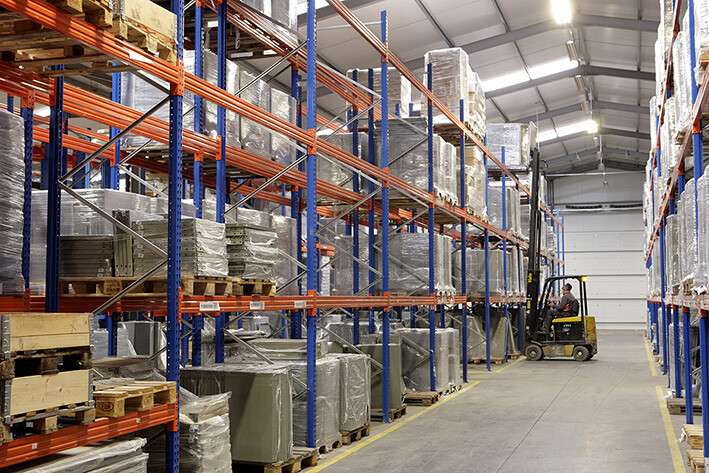
It's not just the size of the workshop that matters, but how to use. Sometimes a mobile bench helps free up space; other times, constantly moving it becomes inconvenient and inefficient. Taking advantage of height with metal shelving for workshop It also helps to clear the floor and leave more room for the bench.
Type of usual tasks
Ask yourself a simple question: Will you be using the bench as your main workstation or as a versatile support? If it's your primary workstation, stability is usually more important. If it's a multi-purpose support, mobility can be a clear advantage.
Load capacity
Make sure the workbench you choose can withstand not only static weight, but also continuous use. In a workshop, loads are not always uniform or even.
Safety and ergonomics
Comfort matters, too. Height, access to tools, working posture, and ease of movement around the workbench all influence productivity. A workbench should help you work better, not force you to adapt to its limitations.
Quality of materials
Especially if you choose a mobile bench, it's important to pay attention to the sturdiness of the frame, the material of the worktop, and the quality of the wheels and brakes. A flimsy model can quickly become unstable.
The best option? Sometimes, a hybrid solution
In many small workshops, the smartest solution isn't to choose just one option. A combination of a fixed main workbench and a mobile support can offer the best of both worlds.
For example, the fixed bench can be used for the most demanding tasks, while a workbench with wheels It can be used for support, material preparation, internal transport, or auxiliary tasks. This solution is especially useful when the workshop needs to adapt without sacrificing a stable reference area.
Conclusion
A workbench with wheels It can be an excellent choice in small workshops where flexibility, space reorganization, and versatility are important. However, when the work demands firmness, precision, or constant resistance, a fixed workbench is usually the safest and most efficient option.
The best decision comes from analyzing the actual use of the workshop, not from following a general preference. If you need to adapt the space frequently, mobility will be valuable. If you're looking for a stable workstation for safe and consistent work, a fixed workbench will make more sense. And if your operations combine both needs, a combined solution might be the smartest option.



 Español
 Deutsch
 Français
 Italiano
 English (UK)

