
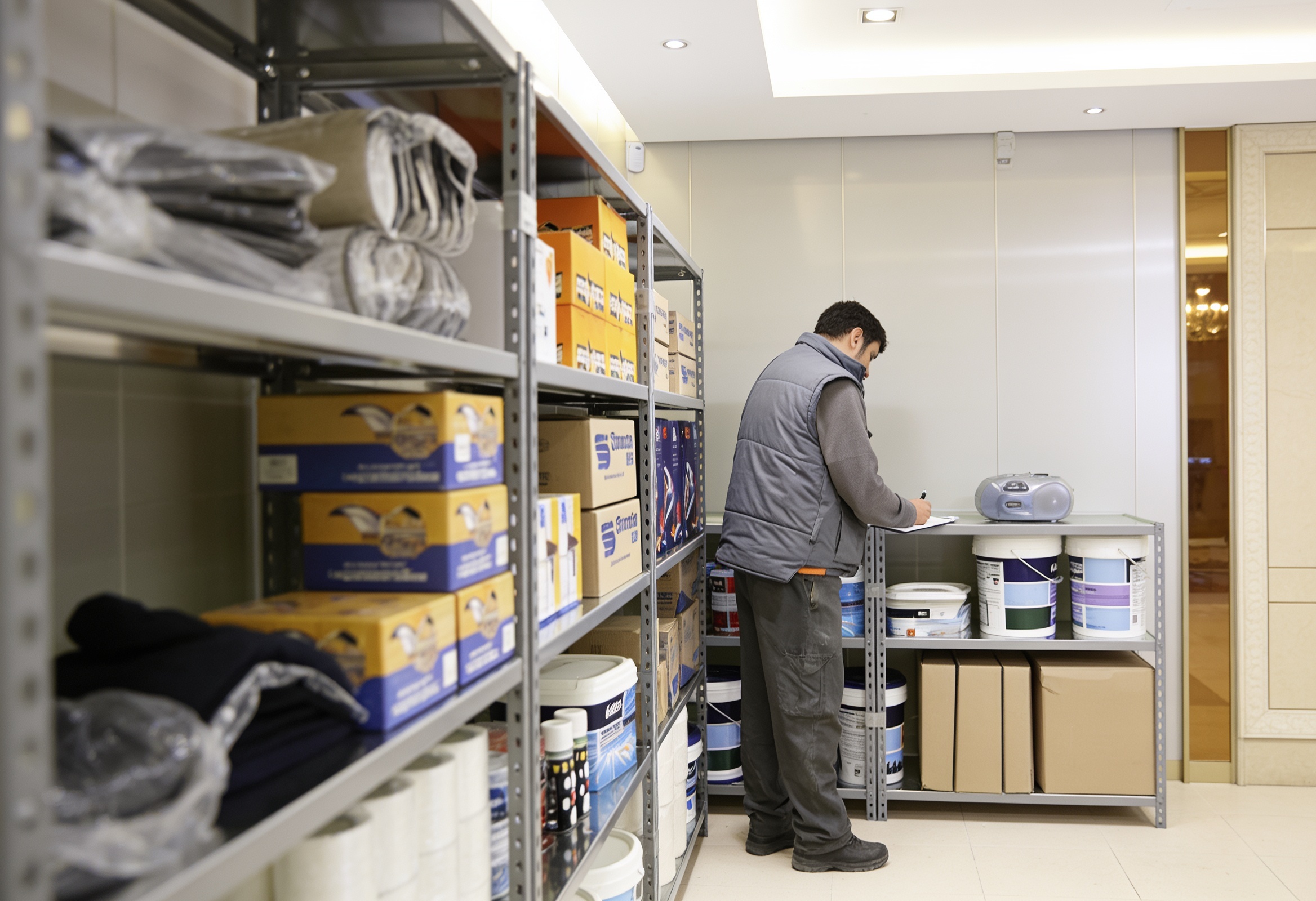
Industrial shelving is an integral part of daily operations in warehouses, workshops, archives, and logistics facilities. Precisely because it's so integrated into the environment, it's sometimes forgotten that it's also a critical safety element. Forklift impacts, overloading, deformation, or improper assembly can transform a seemingly functional shelving unit into a serious risk to people, goods, and facilities.
Therefore, the technical inspection of shelving should not be seen as a mere formality, but as an essential preventative practice. Thoroughly inspecting these structures helps detect damage early and prevent incidents that could be costly or very serious.
Why is it important to check the shelves regularly?
Continuous use wears down any storage system. In environments with heavy loads, mechanical handling, and high turnover, this wear can go unnoticed until a breakdown or accident occurs.
A regular check-up allows:
- Detect structural deformations or damage.
- Identify loose or misaligned elements.
- Check for overloads or incorrect uses.
- Improve the safety of operators and merchandise.
What does the regulation say about the technical inspection of shelving?
The main technical reference for the inspection of metal shelving is the UNE-EN 15635 standard, which establishes the criteria for the use and maintenance of storage equipment. Among other recommendations, it indicates the advisability of carrying out periodic visual inspections and, at least, an annual inspection by a qualified expert, in order to detect structural damage, assess its level of risk and adopt the necessary corrective measures.
Furthermore, in Spain these actions are framed within the Royal Decree 1215/1997, which regulates the minimum health and safety requirements for the use of work equipment, as well as in the NTP 852 from the National Institute for Occupational Safety and Health (INSST), which compiles best practices for storage on metal shelves and the classification of detected damage.
Who can perform the technical inspection of shelving?
Not all inspections require the same level of expertise. It is advisable to combine different types of inspections to detect problems as early as possible and ensure the safety of the storage system.
- Visual inspections: They can be carried out by the operators themselves during their daily activity to detect bumps, deformations or visible anomalies.
- Periodic inspections: These checks are usually carried out by the warehouse or maintenance manager, who verifies the general condition of the installation and records any incidents.
- Technical inspections: They must be carried out by qualified personnel, capable of assessing the structural integrity of the shelving, classifying the damage and determining whether it is necessary to repair, replace components or limit the use of the facility.
In this way, continuous monitoring is established, which helps to prevent accidents and extend the useful life of the equipment. shelving.
What aspects should be reviewed?
| Damage detected | Risk level | Recommended action |
|---|---|---|
| Minor surface abrasion | Low | Record the incident and review it at the next periodic inspection. |
| Slightly deformed strut | Half | Request an assessment by qualified personnel and limit the workload if necessary. |
| Bent strut or damaged stringer | High | Stop using the shelving unit immediately until it is repaired or replaced. |
| Loose or torn anchor | High | Immobilize the area and repair the anchor before using the installation again. |
Warning signs that shouldn't be ignored
Some common signs are:
- Visible damage from wheelbarrows.
- Oxidation or corrosion in sensitive areas.
- Overdue or tilted shelves.
- Elements replaced without technical criteria.
- Unevenly distributed or excessive loads.
When they are detected, action should not be postponed.
How to organize an effective review?
A good strategy combines routine visual checks by the team with more in-depth technical reviews conducted by specialized personnel. It's also advisable to record incidents, classify risks, and act according to priority.
Prevention works best when there is sound judgment, traceability, and rapid response capability.
Checklist for inspecting an industrial shelving unit
- Are there any visible bruises?
- Are the anchors secure?
- Is the load distributed?
- Are there any deformations?
- Are the charging plates readable?
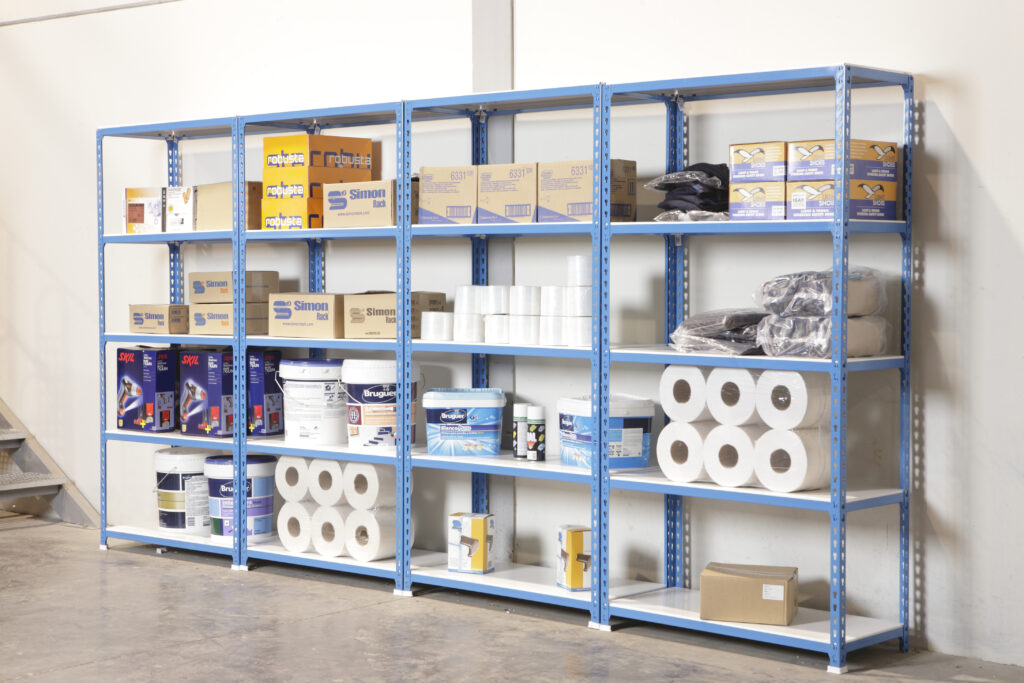
Common mistakes in shelving management
One of the most common mistakes is normalizing minor damage as if it were inevitable. Another is failing to document incidents or continuing to use affected structures until an indefinite future inspection.
There is also a significant lack of staff training on charging, use and damage detection.
When is it better to repair and when is it better to replace?
Not all damage requires replacing the entire shelving unit. In many cases, if the damage is detected early, it's possible to replace only the affected component, such as shelf supports or certain accessories for metal shelving, provided they are compatible with the system and the repair is carried out by qualified personnel.
However, when there is significant deformation in the struts, structural damage to the frames, advanced corrosion, or multiple affected components, replacing the structure with a new one is usually the best course of action. In installations subjected to high loads, opting for medium load shelving or industrial solutions adapted to the intended use helps to maintain safety and extend the useful life of the storage system.
Do you need to renew or expand your storage system?
If you've noticed damage to your shelving or are planning a new installation, choosing the right system is key to working safely and making the most of your space. Discover Simonrack's metal storage solutions and find the option that best suits your needs.
View metal shelvingTechnical inspection of shelving is a key measure for preventing accidents, protecting goods, and maintaining safe working environments. More than just a formality, it's a preventative maintenance practice that helps detect risks before they become major problems.
In storage systems, safety depends not only on the initial design, but also on how it is checked and maintained every day.






 Español
  Deutsch
  Français
  Italiano
  English (UK)