
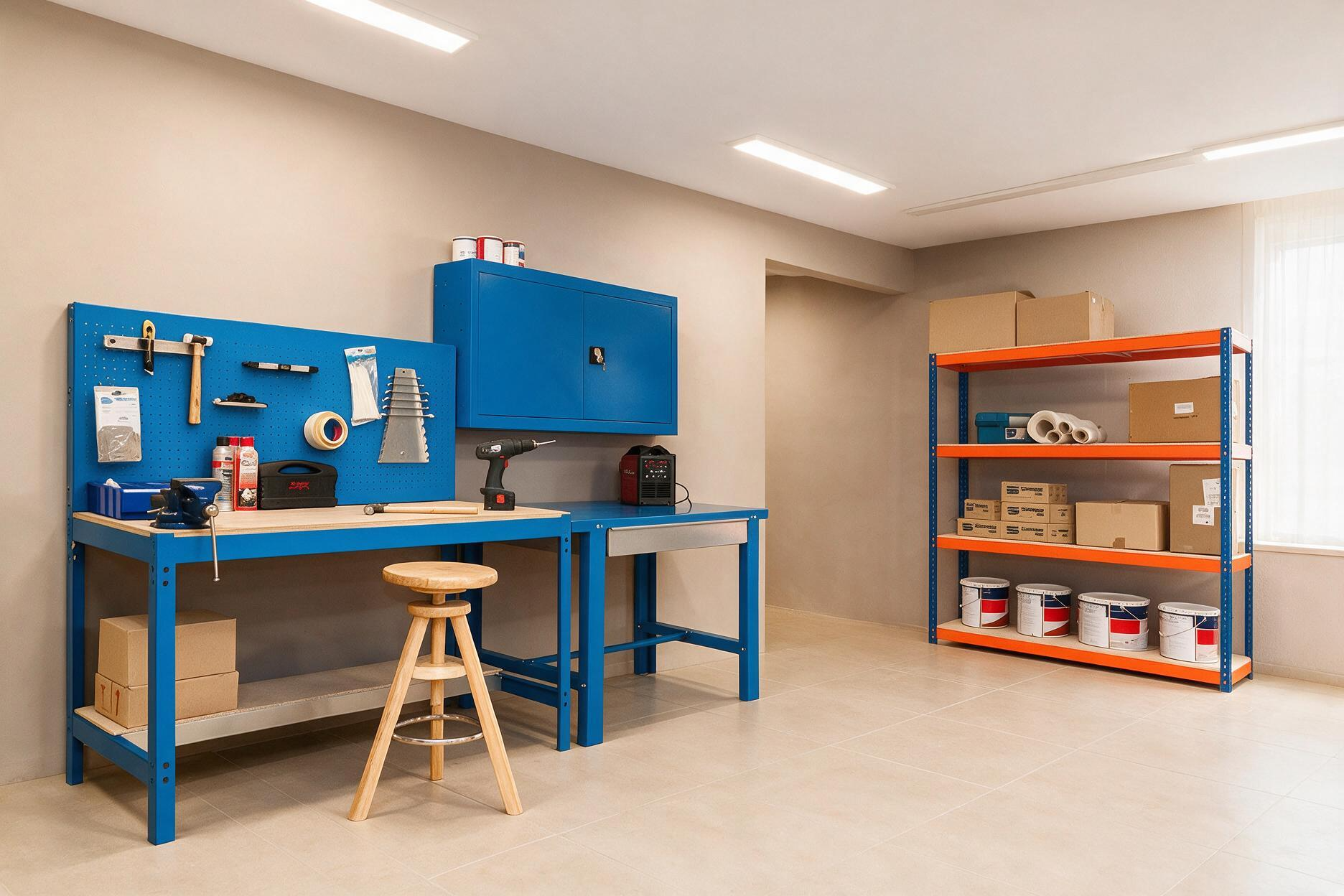
Setting up a small workshop at home can be a great idea for those who enjoy maintenance, restorations, or light mechanical work. But if the base isn't stable, the experience becomes awkward, imprecise, and even unsafe. That's why, when someone thinks about a home mechanic workshop, One of the most important aspects is how to properly secure the workbench.
A heavy, poorly anchored workbench can shift, vibrate, or transmit instability when working with tools, parts, or motors. Addressing this properly from the start improves safety, precision, and comfort.
Why is it important to anchor the workbench?
In a home mechanic workshop, The bench typically withstands continuous stress: impacts, tightening, weight, vibrations, and point loads. If the structure is not properly secured, clear problems arise:
- unwanted movements,
- loss of accuracy,
- greater wear and tear on the structure,
- feeling of insecurity,
- uncomfortable noise and vibrations.
What factors influence stability?
Soil type
Working on concrete is not the same as working on other, less firm surfaces. The anchoring system must be adapted to the actual substrate.
Weight and design of the bench
The more robust the bench, the better the base it offers, but that does not eliminate the need for proper fixing if it is going to be used for demanding tasks.
Type of work performed
Occasional use with small tools does not require the same level of stability as motor tasks, hard screws, or work with constant vibration.
How to avoid vibrations?
If you want a home mechanic workshop For a functional purpose, you shouldn't just think about fixing the bench, but also about controlling how it behaves during use.
Good structural fixation
Proper anchoring reduces displacement and improves the overall support of the structure.
Load sharing
A logical weight distribution and a well-leveled assembly of the rack They help reduce tension and unnecessary movements.
Suitable accessories and surface
The quality of the work surface or tabletop also influences the feeling of firmness and vibration absorption.
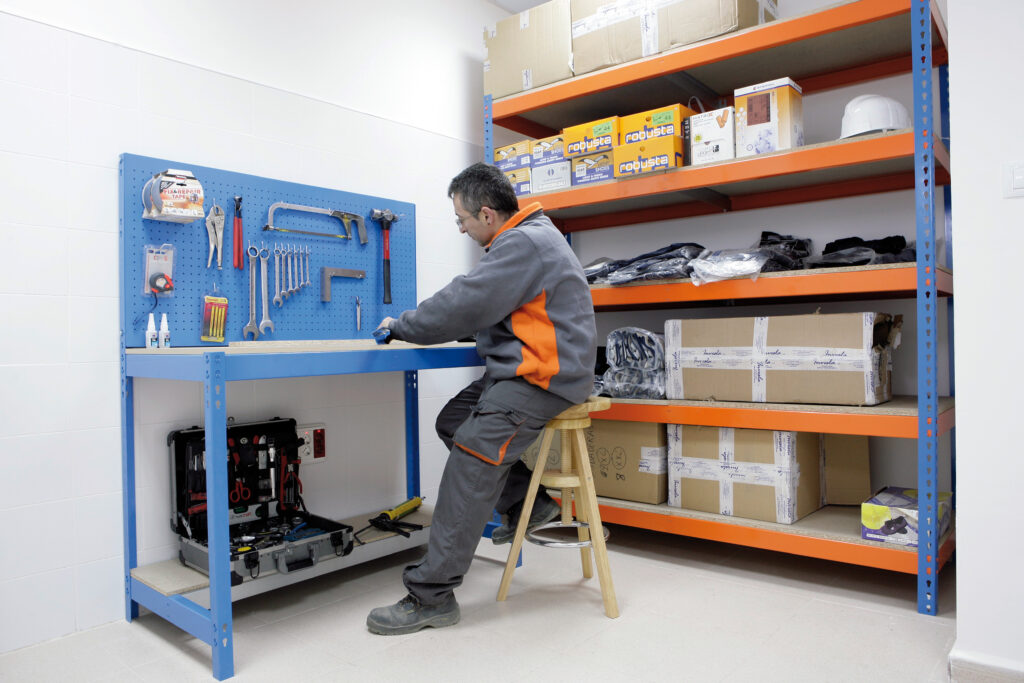
Good practices for safe assembly
- check bench leveling,
- choose a ground-compatible anchoring system,
- check support and load points,
- do not improvise with insufficient fixings,
- plan the use before installing heavy accessories.
What mistakes are made most often
One of the most common mistakes is relying solely on the weight of the bench. Another is installing it in an unprepared area or using it for more demanding tasks than intended without reinforcing its mounting. The effect of repeated vibrations over the long term is also often underestimated.
Why it's worth doing it right
A workbench A stable surface allows for better work, better tool care, and increased safety. Furthermore, it improves the overall experience of the space, especially if the workshop is used frequently.
Conclusion
If you're building a home mechanic workshop, Properly anchoring the workbench is essential to prevent vibrations, improve stability, and ensure safer working conditions. The structure, the floor, and the intended use should all be considered together to choose the right solution.
In these types of spaces, true functionality begins with a solid foundation. Everything else comes after.








 Español
  Deutsch
  Français
  Italiano
  English (UK)